
Deeper Down the Well
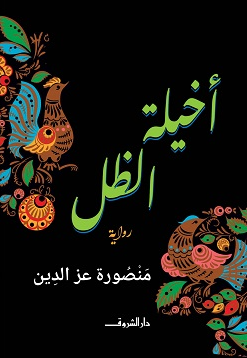
Publication Date: 2017
Publisher: Dar al Shourouq
Country of Publication: Egypt,
Pages: 119
Akhilat al-Zill
Let us imagine a woman and a man sitting on a bench across from the Kafka Museum in Prague. This is where the novel begins. Both are writers. Her name is Camelia, his is Adam. Two strangers on a bench, bound by a shared passion for Kafka and for writing. Soon, they begin to reveal to one another their deepest, most foundational secrets, casting them out like pebbles dropped into a well.
Now let us imagine a Russian woman living in Prague. She, too, is a writer. Her name is Olga. Camelia is a figment of her imagination—or perhaps it is the other way around.
In Deeper Down the Well, Camelia, Adam, Olga, and her lover Chandor come to life in surprising, powerful, tangible, and deeply relatable ways. The reader quickly forgets that these lives are only the imaginings of fictional characters. Camelia’s handsome but brutal father, her vain mother, her restless writing ambitions, her lover and later husband Munir. Adam’s mother, haunted by her childhood as a refugee of an early-twentieth-century massacre. Adam’s short story about a man drowning in loneliness, and Camelia’s own interpretation of it. Adam’s wife, Rose, and her lost sister. Chandor, the pianist, and his broken fingers. Each is connected to the others across time and space in unexpected ways.
What binds these stories together is the universal need to create—the power of imagination, the vitality that inspiration brings, and the hollowness it can leave behind.
At the heart of these fragmented stories lie lost childhood, love and the absence of love, lust, death, ambition, hunger, and despair. Yet each tale remains intimate and captivating, giving the reader the sensation of peeling away the many layers of an invisible, omniscient self. The reader follows in the narrator’s footsteps, searching for answers, as if they might be waiting there, ready to be uncovered.
Will the quest ever end? Will we ever reach the bottom of things and grasp the truth—some truth? Perhaps not. The quest itself is endless. And all these stories are nothing more than the many facets of the same yearning: the yearning for meaning and beauty.
What if we chose the name Camelia for the Cairene woman sitting in the front courtyard of Kafka’s Museum? And Adam for the man from Seattle, seated beside her, listening to her words in silence?
Did I take too long to decide? I know. But such things are forgivable in games of the imagination. Camelia confided in Adam things she had never shared with even those closest to her. Yet she kept one secret to herself—a secret that felt at once like a gentle pat of sympathy and a stinging slap. Both the pat and the slap revolved around the seed of a child that had grown inside her for six weeks before she made the hardest decision of all: to let it go. She spent only a few hours in the hospital, leaving without any visible change, but certain that she would never be the person she once was. In that moment, she felt that a hole—literal, not metaphorical—had been carved inside her. In the following nights, she was besieged by nightmares and overtaken by a weakness for which the doctor could find no physiological cause. She abandoned writing and wandered the streets of Cairo for days, until exhaustion crushed her, forcing her to sit down at a bus station or on a bench in a public park, staring at a spot between her feet, or contemplating a crow perched in a nearby tree.
In a park called Horeyya, just across from the Opera House, Camelia sat, lost in thought, just weeks before her trip to Prague. She pulled out her phone and took a picture of herself—only to find a stranger staring back at her from the screen. A wave of fear gripped her—the sorrow that had settled over her gaze, the droop of her eyelids, the premature wrinkles etched into her exhausted face. At thirty-nine, Camelia seemed utterly alone, drained, and a decade older than her years. This was no mere image—it was a sharp, unrelenting kick that shattered what little reason and composure she had left.
Picture this: a violent kick sends a five-year-old girl hurtling through the air, her head slamming against the opposite wall—without her ever understanding what crime she had committed. Let’s remember this kick, for it is important in our little game. Camelia never forgot it—ever since it sent her flying, teaching her that the most devastating blows come when we least expect them. She believed she wrote for one reason alone—to make sense of this seemingly small event from her early childhood:
“Perhaps I write to find meaning in life’s unexpected collisions—in the kicks dealt to me by those I had never harmed and never imagined my mere existence could trouble,” she told Adam, shrugging her shoulders as if she didn’t care.
He listened, then told her that, as a boy, he had dreamed of becoming a writer ever since he had read a story by H.P. Lovecraft—or rather, ever since he had seen Lovecraft’s name on the cover of a book.
What an extraordinary name! Even now, he shivered at the memory of that distant moment.
“Lovecraft: the craft of love.”
It had struck him then that writing was, in fact, the very craft of love the name implied, calling out to him like a siren perched upon a rock, luring him toward an Ithaca that did not exist.
Geopoetika, Serbia, Serbian, 2019
Related Articles
Read about this work in the press!

