
The ongoing nakba
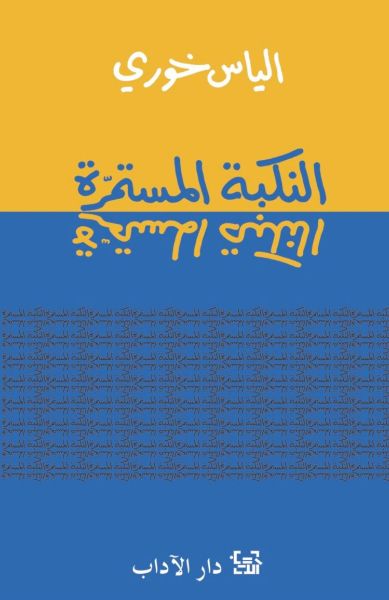
Publication Date: 2023
Publisher: Dar al adab
Country of Publication: Lebanon, Beirut
Pages: 211
“The Ongoing Nakba” is a collection of articles and studies written by Elias Khoury between 2000 and 2023, primarily published in the Journal of Palestinian Studies.
In these essays, Elias Khoury argues that the Nakba is not merely a historical event that occurred in 1948, but rather a continuous phenomenon that is still unfolding today. This perspective feels especially relevant today, while the Gaza Strip faces surreal violence, and the destruction in the West Bank remains ongoing.
What are the implications of a continuous Nakba? Should we focus on the past or the present? the author wonders. Can we regard the massacres at Lydda, Tantoura, and Ain al-Zaytoun, which took place in 1948, as mere memories? If so, how can we comprehend the brutal, more recent events in Sheikh Jarrah, Al Aqsa, Jenin, and Nablus?
Is the past present? How do we draw a line between these two time periods that seem to overlap?
In this book, Elias Khoury examines key dates: 1948, 1967, 1982, 2002, and 2023. While these dates represent important milestones in the modern history of Palestine, the author urges readers not to overlook the brutal events occurring on a daily basis. The ongoing nature of the Nakba is a reality that movements for Palestine have often failed to grasp: the Nakba is not simply the result of the events of 1948, but rather an ongoing journey.
The book is structured in two parts. The first part provides thoughts and conceptual tools to understand the notion of a continuous Nakba. The second part offers nuanced reflections on the historical and conceptual relationships between the Holocaust and the Nakba.
Translated by Yasmeen Hanoosh
It is not possible to read Palestinian culture outside the context of the Nakba, which has been ongoing for the past seven decades. The culture that was born in the thick of the struggle for survival is a culture of survival and resistance. Its moral superiority is the condition by which it is able to generate new idioms and meanings. Therefore, the conflict between this culture and Zionism over who gets to tell the story is essentially a conflict over who gets to inherit the land and the future.
Can writing read the exilic, or has it itself become one of its manifestations? How do we read cultural production as a prospective horizon today when blood and pain intertwine, destruction commixes with death, and the cries for help by refugees resound throughout the Arab world? Our exile redoubles, whether inside our homelands or outside, as if we are witnessing an Arab decline into a bottomless abyss! Have words lost the luster of meaning amidst this comprehensive violation of human meanings?
The difficulty to speak today issues from a general sense of defeat and despair that pervades the intellectual and cultural milieu—here in Syria and Lebanon, and there in Palestine.
The “here” and “there” are not as distant from one another as some supposed when the wave of Arab revolutions swept through and were buried alive by the antagonistic coalition of military and fundamentalist tyranny. What is happening today in Syria afflicts Palestinians and destroys their refugee camps, and the oppressive measures we are witnessing against Syrian refugees in Lebanon puts all refugees and foreigners in a precarious situation. The political deadlock that isolates democratic culture from action in Lebanon is finding a similar expression inside
Palestine.
How do we read our cultural reality and with what tools? Is culture just a witness that records tragedies in words, paintings, and exhibits or is it part of an infrastructure that shapes awareness, and confronts hardship through an effort at drawing a new horizon? Answering these questions is extremely difficult. I do not think we will be able to arrive at comprehensive answers today, ones that could end our confusion, and outline the trajectory that could take us out of the labyrinth of the questions that deprive us of sleep.
What I will say today is merely an attempt to pose questions upon questions as words’ search for their meanings. This is because one of the symptoms of the cultural-political catastrophe we are facing today lies in the divorce between words and meanings, and in the vulgarity of speech that seeks to erase the difference between the victim and the oppressor.
Archipelago, United States, English, 2027
Related Articles
Read about this work in the press!

