
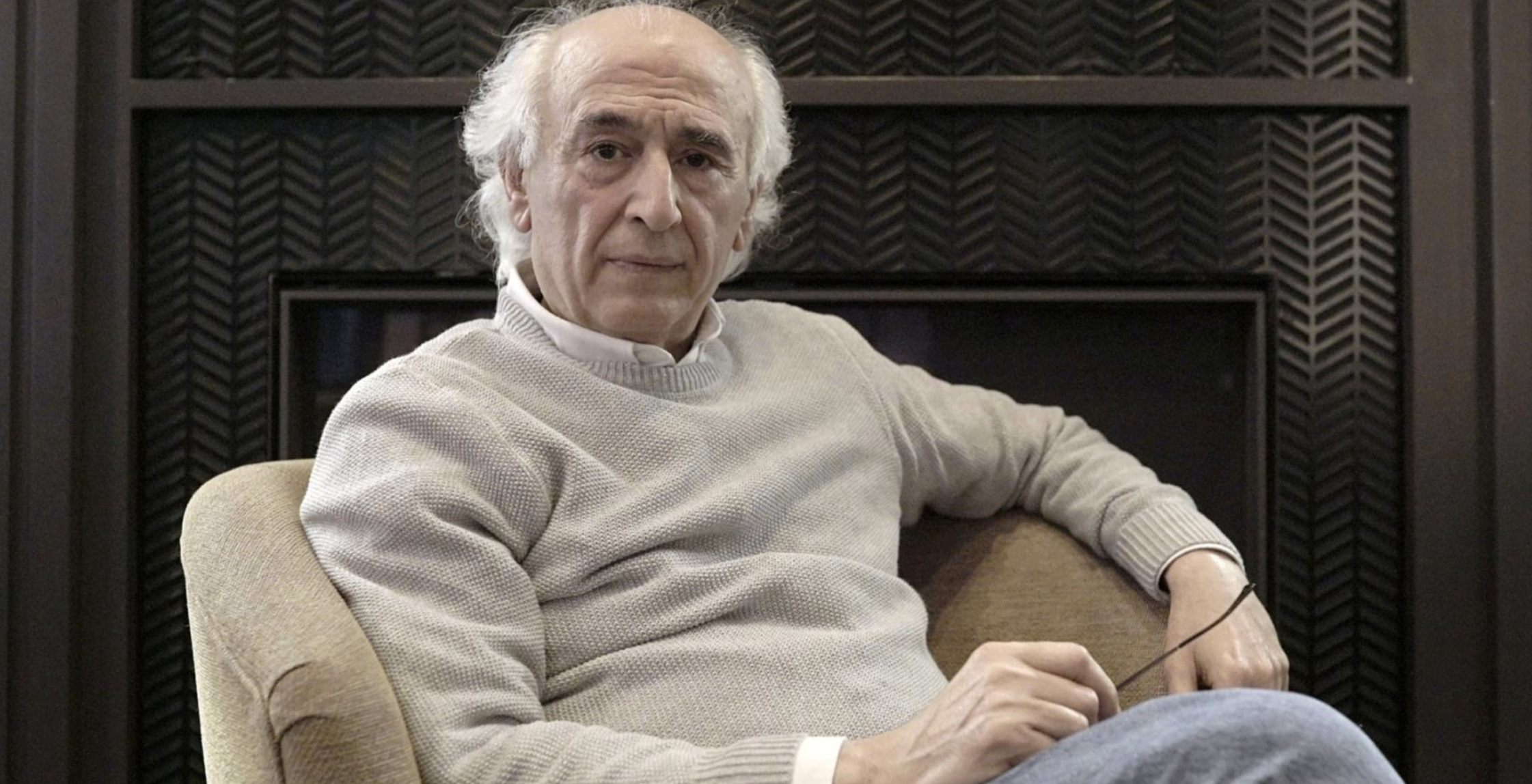
An interview with Betül Durdu on June 5th, 2025 for K24
We know you began writing The Sleepless Giraffe in Damascus in Syria, but had to flee due to war. As a refugee, how did continuing to write impact your literary language and narrative style? In your view, what is the connection between exile and literature?
I started writing the novel in Damascus, then continued during my six months in Turkey and eight months in Greece. I eventually completed it in Brussels. I don’t think this journey caused a noticeable change in my literary language. These places merely offered temporary shelter for my writing. Deepening literary language happens through ongoing effort—reading, writing, listening—regardless of place or subject. In this sense, exile, just like homeland (its opposite) or love, friendship, and pain (which I feel more intimately), stands as raw material waiting to be worked into my novels.
There’s a lyrical inner voice throughout the text. How did you shape your style? Do you follow a poetic rhythm while writing?
I drew on many art forms while writing the novel. At times, readers may feel like they’re watching a theatrical scene. This may stem from my deep interest in theater, my former experience as an actor, and the countless plays I attended during my ten years in Moscow. I also published a play called Two People. Some scenes feel cinematic, where details are viewed either up close or from afar—as with Issam’s funeral or the giraffe leading the crowd to Umayyad Square. Poetry, with its sharp and intense structure, helped me create unusual connections between emotions, thoughts, and objects.
The giraffe is more than just an animal in the book—it becomes a conscience, a memory, even a way of sensing. Why did you position this character as a “magical being”?
You can see the giraffe as a symbol of conscience, memory, and awareness—or, as many readers did, a symbol of Syria or its people. Yet when writing, I was careful to make the giraffe a real giraffe, President Petrova just an Afghan dog, Mostash a poodle, and Gazale a typical housecat. I tried to steer clear of familiar literary portrayals of animals. I wasn’t aiming to deliver messages or morals. Despite the grim subject, I wanted to create a beautiful novel—one that inspires powerful, strange, bittersweet impressions. I chose the giraffe as the protagonist because I already had a clear vision of the final scene: a massive animal leading the residents of the Russian neighborhood to central Damascus. At first I thought of a horse, but it didn’t offer the visual scale I needed. The giraffe, both majestic and rarely seen in literature, seemed perfect. Learning about giraffes’ lives and habits helped me add details I hadn’t initially imagined.
There seems to be a language of silent communication between the narrator and the giraffe, even beyond words. Where does this fit in your literary philosophy?
Most of my novels include moments where communication between characters is silent and deep—filled with emotions, thoughts, and sometimes anger. In this book, that silent communication becomes a central device, not just between the narrator and the giraffe but among all animals and humans. It’s continuous throughout the novel. The connection between the narrator and the giraffe is rooted in the recurring image of the narrator’s mother. For example, after the first car bomb explodes in the Russian neighborhood and he realizes neither the area nor the giraffe will survive, he embraces the giraffe like a dying mother. Silent bonds, like the one between the giraffe and the dog Mostash, also drive the plot. The bird that speaks to Nona (without her planning to) seems to reflect the giraffe’s emerging thoughts. Because the bird represents a fragile hope for doomed, peaceful people, the only way to help them breathe was through a quietly unfolding story within. In near-impossible conditions, survival often relies on silent communication. I used it frequently, especially to reflect the stormy moments in the lives of animals and people in the Russian neighborhood.
The narrative time feels short, but the story feels expansive—time stretches and contracts. How do you view time as a literary element?
Time must be flexible to fit the novel’s changing rhythms. Sometimes, a small inner detail in a character takes more time to convey than multiple external events. The writer’s instinct must act like a precise scale, ensuring the narrative never loses its rhythm—starting and ending each beat exactly when it should.
Space is another layered element in the novel. While the zoo takes on allegorical meaning, where does real-life Damascus stand in your mind
In my novels, setting doesn’t have to strictly reflect reality. Sometimes it aligns with real information, other times it departs from it. For some authors, a real place is something to be discovered or sanctified due to historical or cultural value. I don’t feel bound by that. Some real locations can pull readers away from the author’s intended meaning. When I do use real places, I strip away their conventional associations by placing them outside their usual context. So, my books often lack solid historical references to actual places. The Russian neighborhood is part of my fictional world—it also appears in my novel The Price, sharing some characters, including the narrator. I sometimes include common characters across separate novels—like in Giraffe, The Price, and my latest, The Strawberry Handkerchief. My fictional settings do include real streets from Raqqa, Aleppo, and Damascus, but I bring together these cities’ popular locations in ways that are geographically impossible.
Vision, gaze, attention—these sensory themes are prominent. Why is blindness such a central metaphor?
There are three blind characters in the novel who actually see with their hearts: the giraffe, the narrator’s mother, and a side character in the early pages. I wanted to convey that they are not truly blind. Real seeing comes not from the eyes, but from an insightful heart. Nona, the narrator’s close friend, tells us that there should be no border between what we see with our eyes and feel with our hearts—and that we must build bridges between what we want to do and what we can.
The novel takes place during a war, but its language is not the language of war—it’s dreamlike, rich in magical imagery. Was this a way of distancing yourself from reality or seeking a different kind of truth?
I don’t write historical novels or document real events. I choose topics that can be artistically shaped into a novel. My goal while writing Giraffe was simply to create a contemporary and beautiful novel. As someone who lived through the war, my priority wasn’t to write with emotional fervor. Many authors portray themselves as both writers and warriors—filling their novels with blood, corpses, ambulances, and shrill political declarations. That’s not me. I’m not a fighter; I don’t enjoy conflict. I just want to write perfect novels. Of course I have strong feelings and angry opinions about the horrors we’re living through, but I’d rather express them over coffee or dinner with friends—spoken gently. Even the worst tragedy, when it lands on my writing desk, turns cold. And once it becomes part of my book, it no longer resembles the original event. In Giraffe, war is a distant backdrop. What mattered most to me was capturing, in an elegant and engaging way, the effects of war and oppression on human and animal souls.
The novel feels like a dark fairytale; the mundane and the dreamlike are constantly intertwined. How do you balance writing the magical into reality versus anchoring the magical in the real?
No matter how much I rebel, I can’t escape reality in my novels. As I said before, you have to start with what exists. But staying completely loyal to reality isn’t possible—not even for historians. They too are influenced by their own biases or those of their sponsors. In literature and art, it’s normal for a writer to reshape the real material they begin with, because the rules of writing differ greatly from the rules of reality. I don’t abandon reality entirely because I believe in convincing readers that what they’re reading could happen. That belief is essential—otherwise, the work risks becoming an unbelievable absurdity in their eyes.
Finally, considering your style, can we draw a connection between Latin American magical realism and the narrative traditions of the Middle East?
In my view, it’s impossible to divide novelists by nationality or box them into rigid categories. The novel is like a tree—its history is short, but it’s grown thanks to contributions from writers of many nations. With the Industrial Revolution and the spread of the steam train, literature and art began to circulate globally. This enabled novels like those of Balzac and Emile Zola to be published simultaneously in Paris and St. Petersburg. Novelists from Europe, America, Japan, Latin America, and the Middle East all contributed to the development of literary tools across different branches and schools of the novel. This cultural exchange accelerated in the 19th century and continues today thanks to modern communication. As a contemporary novelist, all I aim to do is be part of this ever-evolving international current.

