
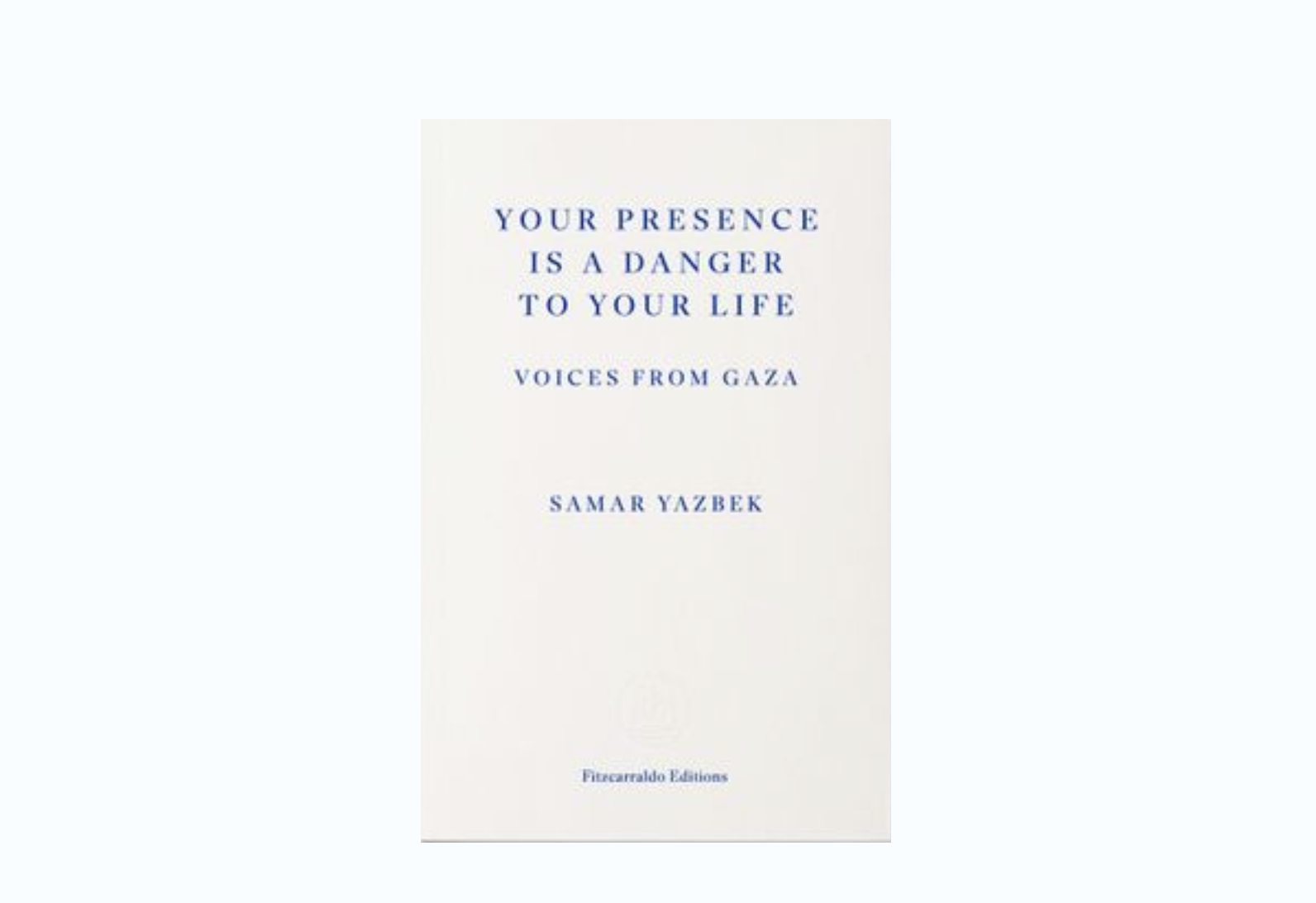
A review by Lucy Beckett, for The Tablet, May 14, 2026
This is a horrifying book, its chilling title taken from leaflets distributed in Gaza by the Israel Defence Forces, not often in time for the recipients to escape being bombed.
The Israelis have famously allowed no foreign journalists into Gaza since 7 October 2023, and have killed more than 250 Palestinian journalists. Samar Yazbek is a Syrian writer, in exile since taking part in protests against the Assad regime during the Arab Spring of 2011, and tragically experienced in the carnage of asymmetric war. From March to June 2024, she met and talked to hundreds of Palestinian survivors of Israel’s devastating campaign against Gaza that began on the day of the Hamas attack. She could do this because these seriously injured Palestinians were among those allowed to leave Gaza for treatment: she talked to them in Doha, before Qatar came under Iranian attack in the latest Trump–Netanyahu war.
In an anguished introduction, Yazbek describes their courage and willingness to talk about the violence that mutilated them, violence more pitilessly organised than Assad’s, and inflicted with even more terrifying weapons (huge barrel bombs that can bring down tall buildings and leave poisoned air for rescuers; low-flying sniper drones that can recognise, follow and kill individuals).
A couple more pages, written in Paris in November 2025, record the addition of systematic starvation to Israel’s armoury deployed in Gaza.
The rest of the book consists of 27 first person accounts, 25 given directly to Yazbek and two from internet interviews with young men who have stayed in Gaza, by a range of people, men and women, aged between 13 and 65, of what happened to them in the weeks and months after 7 October. Their stories are truly terrible. They are also horribly consistent, and no doubt
representative of many hundreds more.
The two million Palestinians crowded into the Gaza Strip have long been accustomed to war, from the major expulsions and killings of 1948, through the occupation after the Israeli victory of 1967, the two intifadas and many flare-ups of violence since. But this, these witnesses say, has been different: it felt as if the Israelis wanted to kill them all. Almost all of them were living with
20, 30 or more members of their families in three- or four storey buildings divided into different dwellings. Many of them lost to bombs all or nearly all of their relatives: grandparents, uncles, aunts, cousins, their own parents and siblings, lots of children.
…
This book is a searing read, very moving both in the piety so often saving the sanity of these casualties of appalling vengeance, and in their hope for a future in which there will again be mosques, schools, universities and hospitals in Gaza.

