
A review by Al-Muthanna Sheikh Atiya for Alquds Alrabi, November 11, 2023
Love, then love, then love: the dream of novelists, the sustenance of narratives—if not their very air, without which they suffocate in the aridity of feeling. And love, then love, then love: the nightmare of novelists as well, the strangler of novels at the same time, through what it has accumulated in the history of fiction of stories of chastity and fidelity, temptations and betrayals, possession and freedom, and everything that can and cannot be imagined about it, or penetrated through it. And yet it is love—then love, then love—that grants novelists the power to challenge themselves into inventing the new within it, and that opens for them, if they remain faithful to their hearts in their pulse toward the Other, and widen their visions in probing the transformations of their age within it, and possess the creative power to treat the faces of their love—bare, unknown, ancient, and ever-renewed—the gates of paradises for the invention of novels.
From Gilgamesh, whom his conflict with Ishtar led to being lost in his immortality, to the masculine Odysseus who deludedly pawned Penelope to the weaving of his glory, to Paris who burned Troy with Helen’s apple, to Adam who fed Eve the apple of sin, to Qays of Banu ‘Udhra in the madness of his union with the goddess, to Romeo, wounded by the mulberry of Sham of the Babylonian Thisbe, and to and to and to the various love narratives that do not end with Love in the Time of Cholera, nor are erased by the spirit of Ishtar that runs through the beloved Syrian women. Nor do they disintegrate with the disintegration of the Soviet Union: love continues to narrate its faces, into what, in that time of disintegration, intertwines with Christian miniatures in the Middle Ages, and Hieronymus Bosch’s Garden of Earthly Delights, and Gogol’s Dead Souls, and Turgenev’s smoke, and Dostoevsky’s White Nights, and Shakespeare’s Desdemona’s handkerchief.
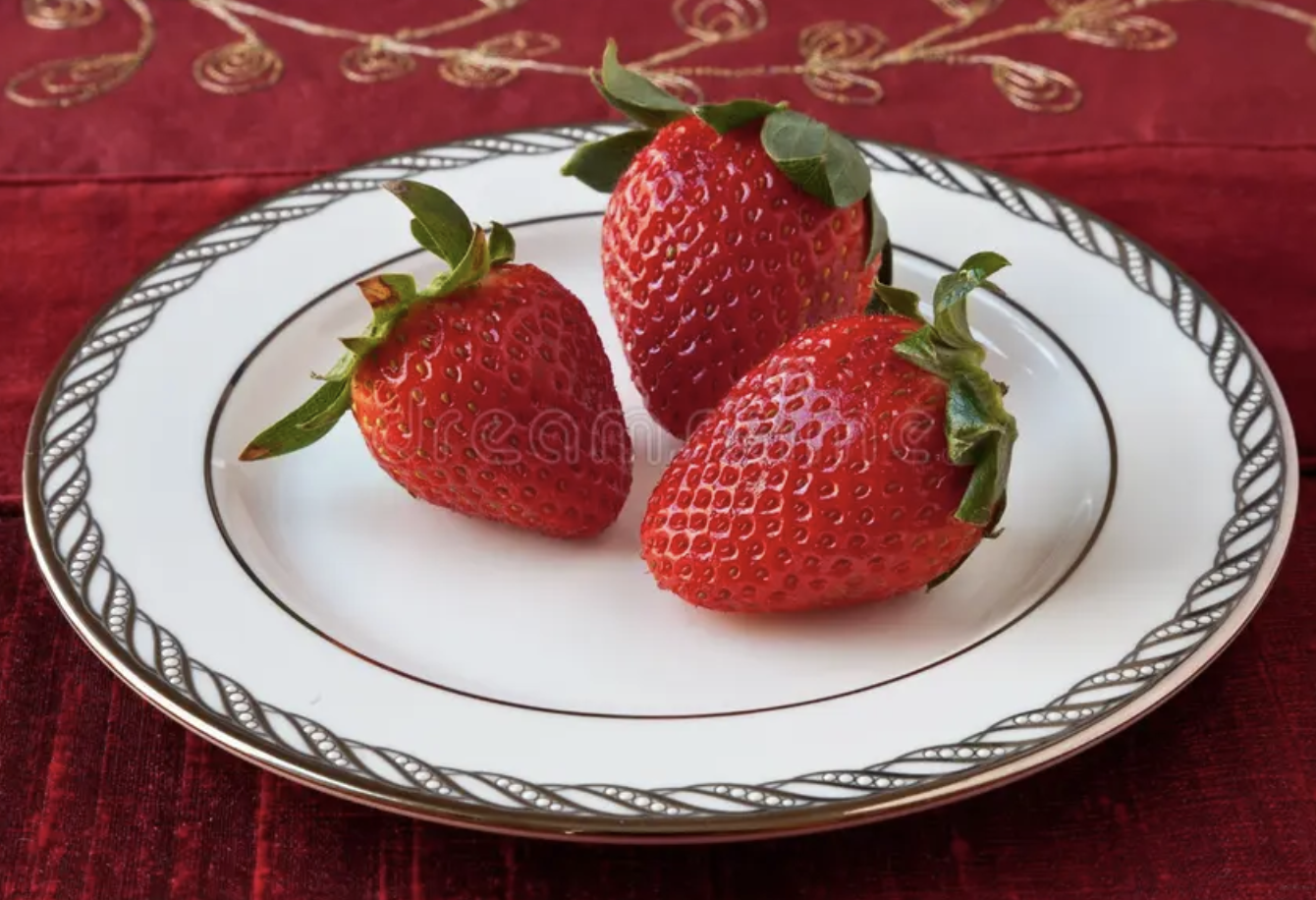
Gathered around a scrap of paper for a love appointment and three strawberries, the Syrian novelist Khalil el-Rez opens his novel about love with a title of deep symbolism and burnished by the wine of love’s culture, a strawberry-spotted handkerchief, and develops it into sensitive dimensions by interweaving with this title and transforming it, through Shakespeare’s double-symbol concept, into the novel’s central theme. It moves from the three strawberries of the first heroine of the novel, “Raya,” to the embroidery of the restaurant tablecloth that gathered the frightening, complete beauty represented by its second mistress, “Natalia,” with her friend, the narrator, and his friend; to the bag of strawberries of its third mistress, “Nonna,” who eats them one by one with pleasure on the garden chair before the statue of Pushkin—killed in a duel over a woman—to the massive stone strawberry frieze crowning the walls of the broad avenue toward Kazan Station, where she offers him a strawberry from her bag.
It reaches the transmission of Al-Rez’s theme of the double meanings of love in Nonna’s birthday evening, for which her lover Volodya prepared, before someone he suspected was his rival, a basin filled with strawberries to be crushed by her bare feet, and her words that she “learned from her father that strawberry wine is very delicious if its fruits are crushed by the feet of a woman who loves you on her birthday.” And teacher Maxim Vadimich’s expression of his puzzlement when he said: “What has always called me to reflection was the handkerchief that Shakespeare embroidered with strawberries, then made his Moorish hero Othello present as a gift to his wife Desdemona. I have always asked myself what drove a great playwright like him to choose strawberries in particular. And sometimes it occurs to me that his poor heroine Desdemona was the victim of those delicious red fruits embroidered in her husband Othello’s gift, without my being able to prove it.”
A Layered Interweaving in the Narrative
In his novel about love, Al-Rez establishes a simple structure consisting of six chapters that branch into a few sections marked with Roman numerals, with a seventh concluding chapter containing a very short paragraph that does not so much conclude as open the novel onto worlds of forms and images of love in their opposing, diverse shapes. Within this structure, he treats the struggle of men over a woman, the choices of women constrained by the history of patriarchy, the feelings of guilt in betraying woman, and the evasions of love within man—harmonizing this structure with a developing style based on a hidden, cumulative interweaving open to worlds of possibility.
On one level: in his narrative system, which is limited to a single narrator who speaks in the first person about himself and the other in relation to him, al-Rez invents—going beyond Milan Kundera’s exciting style of analyzing the other through knowledge of him—a style of narration by a non-omniscient narrator, using the future tense “will” and “shall,” opening for his reader rich worlds of possibility concerning his own life should he encounter the same problems, which he certainly will, because this is how the events of life proceed. He occupies his reader’s mind with questions about the behavior and reactions of the other in the situation presented, in a natural flow that happens in life and is practiced by many novelists in its ordinariness, through daydreams from which Al-Rez dusts off the ordinary with the question what if?, and the acting according to the possibilities of that why not?, before the moment of the storm arrives, which comes in a way other than what fear or shame or contemplation or desire would usually draw.
Within this system of a narrator who does not know the other except through himself, Al-Rez introduces the present tense into the past-tense action that drives the novel with “Once upon a time,” creating through this complicit entry with the future tense a cinematic scenography, further enhanced by a light, veiled irony that he masters as a pleasure in imagining and living the moment. He increases these bursts of pleasure through the poetry of the event and the richness of culture interwoven to embody the relationship of past to present, as in:
“I tried, as much as I could, to exaggerate in drying my face so as to be able to clean my features completely of any concern with the telegram that had been read in the distributor a little while earlier. But Abdul advanced toward me during this time and lay in ambush for me right at the bathroom door. And it was of course unthinkable that I should continue cleaning my face any longer than that, so I threw the towel over my shoulder and turned toward him as if I had not noticed him until now. Then it seemed to me, as I slipped out of the bathroom door brushing exactly past his belly, that I could whistle from the intensity of my indifference to him, were it not for his heavy hand that suddenly landed on my shoulder and began to pat it. I paused in my place like a bewildered man. And I did not want to appear before him embarrassed by my horrible sins that he imagined, so I asked him whether he had attended Fellini’s film The Interview that they were showing at the nearby Cosmos Cinema.”
A Layered Interweaving of Characters
In this layered interweaving, Al-Rez develops, on another level, a special style of treating his characters—especially the female ones—through the vision of the male characters toward them, in particular the character of the Syrian calligrapher, the narrator’s friend Salem, who, “in his opinion, believes it is stupidity and lack of conscience and finesse to compare one woman with another,” and who “believed that the ugly woman exists only in the minds of men limited by prevailing standards of beauty.” Al-Rez introduces images of woman and her psychology through literary characters, especially Russian ones, as in: “On another evening he expressed to me his great love for Chekhov’s heroine Sonya as a literary embodiment of a woman of unconventional beauty in her brave image.”
Al-Rez deepens his treatment of the woman of conventional beauty and the woman of unconventional beauty through a refined, cultured interweaving with types of Arabic calligraphy: the closed Kufic in its perfection, and Thuluth script that always invites you to discover the meanings hidden behind the apparent meanings. In this, el-Rez enriches his reader’s imagination not only with cultural analogies, but also with the interweavings of human beings in the way they deal with neglected objects by force of habit, at a time when they pulse in their truth with what expresses their longing, desires, fears, and all that concerns their feelings toward beauty—as the reader feels in the character of Nonna, who may have been drawn to her concept of the hidden within the apparent in this man who moves with the game of his absent beloved Raya in solving her problem with her husband.
In the Apparent and What It Conceals
In this layered interweaving of narrative style and character treatment, Al-Rez develops outwardly a love story between a Syrian man—the journalist narrator interwoven with the character of the author and his personal life, whose name is never mentioned in the novel, and in whom the reader finds real correspondences with what is known of his life—and an Azeri woman who lives her right to choose her love, breaking the bonds of a marriage imposed by circumstances that no longer suited her, in the time of the disintegration of the Soviet Union and the eruption of what its abscess had long stored of corruption, tyranny, and inner darkness, highlighting the characters of the reproachers represented by the opportunistic Azeri Abdul.
In this story—truly classic and gripping in following what will happen of the husband’s reactions to his wife’s choice of another, despite their prior agreement to separate, and the dangers to which the lover-narrator will be exposed—Al-Rez leaks in the deceptions of love where circumstances direct destinies, perhaps in ways different from what they would have become without them. He also leaks to the reader, through the interweaving of the narrator’s relations with two potential women lovers, Natalia and Nonna, and the opinions of a friend whose experiences taught him not to believe in exclusive love despite the revelation that he is married, the many faces that love contains, and passes on to him a cognitive richness either reconciled or in conflict with his convictions, but in all cases stimulating his thinking about the bewildering relationship between man and woman, where the ending comes with an appointment of satisfaction interwoven with two women within the narrator:
“At seven o’clock on Wednesday evening, I was, within myself, strolling with Nonna in the botanical garden, eating stuffed vine leaves with Raya in her friend Anoush’s apartment, and thinking of repairing my broken bicycle in the distributor so that we might go out riding on it, I and the doll, for the weather was very beautiful that evening.”

