
Interview conducted by Oussama Marouk for Almodon, December 18th, 2022
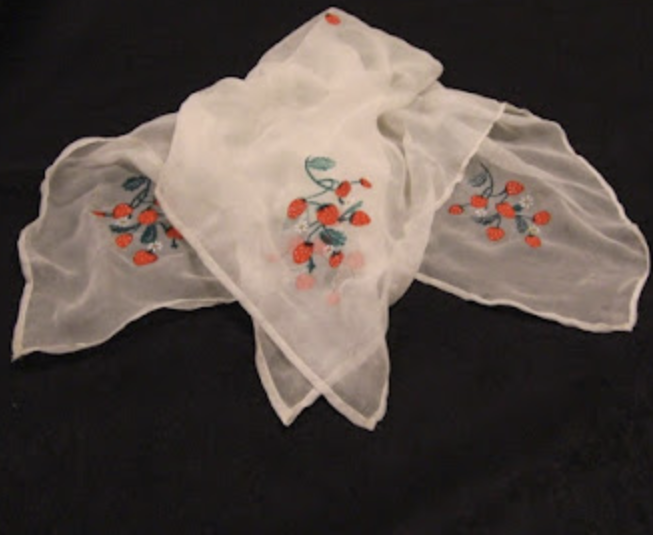
Khalil El-Rez’s latest novel, Strawberry spotted handkerchief, intersects with Dostoevsky’s White Nights, Shakespeare’s Othello, and other global works, exploring divergent meanings of love, fear, betrayal, loneliness, friendship, and the human struggle with the self.
With an unnamed Syrian protagonist, reminiscent of the dreamy hero of White Nights, Khalil El-Rez sets limitless boundaries for his work, relying on a fertile imagination and unrestricted creativity. Just as the hero of White Nights befriends the city of St. Petersburg with its streets and buildings without having a single friend among its inhabitants, the protagonist of Strawberry spotted handkerchief resides in Moscow, yet lives predominantly in his imagination, creating a real life for everything he observes—people, plants, animals, objects. However, he discovers that no matter how much he distances himself from the overflowing life around him, he cannot live entirely within himself forever:
“From my long experience of living inside myself, I have learned that I do not always escape the stubborn annoyances that seep in from the outside, or from under the debris of events and days in my own memory.”
With a short message and three strawberries, the protagonist—working for the Arabic edition of Moscow News—finds himself entangled in a love for Raya, an Azeri woman who is married. Beneath the city’s sky, he engages in battles to defend his love or to rediscover himself, especially since these adventures may have been no more than the limits of his imagination, a notion reinforced by his simultaneous relationship with another girl, Nonna. All of this unfolds against a backdrop of successive symbols and meanings that the strawberry embodies through the ages—from a symbol of perfection, integrity, and chastity to one of seduction, pleasure, and carnal delight, culminating in Shakespeare’s ingenious blending of both:
“It can serve as a symbol of chastity and fidelity as long as the handkerchief is with Desdemona, and yet also serve as a symbol of seduction and betrayal once it reaches Cassio’s hands.”
Neither the husband nor the protagonist of Strawberry spotted handkerchief succumbs to savagery like Othello during the love triangle confrontation. El-Rez writes one of the novel’s most beautiful scenes, triumphing in the humanity of his dreamy hero and offering a striking glimpse of what culture can achieve in a human soul. The hero prides himself on overcoming the “calf,” a symbol of his own barbarism, returning it to the pen of his psyche, saying he buried it under all the books he read, the music he listened to, the orchestral concerts he attended, the plays and films he watched, and all the paintings that enchanted him.
Here, El-Rez speaks to Almodon about his work in greater detail:
—If every work grows from an idea, a sentence, or a scene, even from the author’s own life, can we say that the seed of this novel grew from the previous work, which praised the giraffe’s abilities: “Perhaps it would be very useful for us now to remove as much as possible—or at least forget, or neglect where we could—the old accumulated boundaries that usually separate what we want to do from what we can do in reality, as well as the boundaries between the places we see with our eyes and those we see with our hearts or minds”? Is this precisely what the new novel’s hero does? Did the novel originate from this? Is the unnamed protagonist the human equivalent of the giraffe in The Russian Quarter?
A perceptive reading might indeed consider the protagonist of A Handkerchief with Strawberries as a human analogue to the Russian Quarter giraffe. Both appear to act as if they do not perceive the boundaries between reality and imagination. Yet there is a fundamental difference: the giraffe does not sense these boundaries because, for it, they do not exist. Its world, as envisioned by the narrator of The Russian Quarter, is undivided—there is no separation between reality and imagination; what it sees with its eyes, it sees with its heart. The hero of Strawberry spotted handkerchief, however, fully understands the distinction between reality and imagination. He is aware of the differences between the world he experiences internally and the world outside. Throughout the novel, he consciously intertwines these two worlds into a single braid. In other words, he continually uses his knowledge, his playful spirit, and his desire for a varied life to narrate his external world within his inner world differently.
—In the same context, is Nonna in A Handkerchief with Strawberries an extension of Nonna in The Russian Quarter, or merely a coincidence of names?
In my fiction, certain characters appear across different novels, though the narrative structure and artistic aims differ. For instance, some characters appear in both Al-Baddal and The Russian Quarter. The poet Kadri Pasha from Salmon Erlandi also appears in Al-Baddal, but as a traffic police officer. Similarly, Nonna appears in both The Russian Quarter and Strawberry spotted handkerchief, but within two independent narrative structures.
—Previously, when asked about the giraffe in The Russian Quarter, you said interpretation is left to the free reader. This time, in A Handkerchief with Strawberries, the interpretation appears within the work itself, in the final pages, perhaps as a delayed reward, in Maxim Vadimich’s explanation of the meanings of the seductive plant, especially emphasizing Shakespeare’s interpretation as a vehicle for endless possibilities in male-female relationships. Was this your intention this time? How do you view interpretation in general, as the text’s author?
The reader remains free to interpret here as well. What Maxim Vadimich offers is a final, technical, and necessary continuation of the strawberries’ presence—from the first three berries at the start of the novel, to the embroidery on a restaurant table, to the small strawberry bag in Nonna’s hand in Pushkin Square, to the enormous carved strawberry seeds on the walls of Kazan station, and finally to the crushed strawberries under Nonna’s feet, concluding with Maxim Vadimich’s summary of the strawberry’s history. The narrator does not provide an interpretation of Strawberry spotted handkerchief as a novel; rather, through Maxim Vadimich, the reader is given a key to contemplation. Other elements are left entirely to the reader’s freedom of interpretation. Against the backdrop of these scattered red berries, the reader may discover fresh emotions and new avenues for reflection in the narrator’s relationship with the hero of White Nights, the figure from Wanderer Above the Sea of Fog, the doll found under his bed, and his constant play moving between his two worlds—inner and outer—as well as, in some scenes, being present in more than one place at the same time.
—Was the novel fully formed in your mind from beginning to end while writing, or did it develop over time?
For me, a novel is not a poem that can begin with a concentrated, suggestive image. To start a novel, I need a preliminary vision of its general structure and some characters. Yet after beginning, I rarely adhere strictly to this structure or to the initial sketches of characters. Writing always involves surprises that develop or even alter the course of the narrative. Each new surprise creates ripple effects backward into previously written pages and forward into pages yet to be written, like circles spreading from a small stone dropped in water. This applies to every part of the novel, from the first sentence to the last.
—You set the story in Moscow just before the collapse of the Soviet Union. Why this specific period?
The events could just as easily take place in Moscow today, or ten years ago, with minor adjustments to narrative accessories. They could also occur in Cairo or Damascus, though with more substantial changes to the setting and some characters. Even in Damascus or Cairo, real-world time would play only a secondary role. I am not a historian, nor do I write historical novels. I always treat real-world time selectively and carefully, even when it seems tempting to make it central. Most of my work is not bound to its real-world timeline except for minor technical accessories. What matters most is creating beautiful novels, previously untouched, even if their artistic fabric overlaps with uncertain real events that happened before or during their writing.
—A previous interview cited a writer in exile saying that “what we write in the diaspora revolves around the experience of being uprooted from our native culture, or searching for a lost paradise, and the tension between language and multiple imposed identities.” I think Strawberry spotted handkerchief resonates with these migrants too, living on the edge, caught between worlds, with the protagonist immersed in his self as a form of misfit adaptation. Can the novel be read this way?
I appreciate what the exiled writer said, but in the long period I lived in Russia, I never felt uprooted from my culture, nor did I search for a lost paradise, nor experience a fracture between my identity and others imposed upon me. Identity is not a shirt one can change in every new country. Human identity, for me, is cumulative from birth and grows throughout life, ending only at death. Identity is not dry wood or something fixed. Every book I’ve read—Arabic, global, in philosophy, history, psychology—every painting, film, play, and concert I’ve attended has contributed to shaping my cultural identity. Therefore, if I claim European, American, Latin, Japanese, Chinese, Russian, or Arab cultures have influenced me, it is only as part of my intellectual and artistic exposure, not as a fundamental necessity of survival. I never found a single “uprooted” person in Moscow to write about. Hence, the protagonist of Strawberry spotted handkerchief and his friend Salem never feel their identity is threatened throughout the novel, nor do they ever think about it. They are fully integrated into life in Moscow. If the protagonist narrates the external world within himself, this does not imply he is maladapted; he interacts, works, befriends, loves, visits people, goes to restaurants, bars, theaters, museums, watches films, and follows his favorite writers—so how could he be “immersed in himself” in any maladaptive sense?
—You rewrote your novel Salmon Erlandi in what may be an unprecedented experiment. Why did you publish it without a preface explaining the idea and purpose? Did it receive the critical attention you expected, and will you repeat this approach?
I did not consider it necessary to explain in a preface why I rewrote and published Salmon Erlandi as a new edition rather than a second edition. Perhaps because the first edition appeared long ago, in 2004, and was barely distributed after censorship rejection in Syria, sold in very limited numbers through a friend’s publishing house. My concern, based on accumulated writing experience, was that the novel could still be expressed in a more agile form. I also considered it a foundation for a new creative mood in my subsequent works. That was not the sole reason for rewriting. Everything I write and publish remains open to new possibilities I might pursue. In other words, as long as I write new novels, I will always have things to do with my previous works. I recently began rewriting Where is Safed, Joseph?, likely to be published under a new title, but my focus on a new novel postponed finishing it. As for critical reception, I do not expect it, but I would welcome it if it occurs.
—The ideas you present about Russian literature and others, especially in your latest novel containing many brilliant insights—could they appear in a future non-fiction book? Have you considered this?
I have considered it for years, but my focus on narrative work did not allow me enough time to fully explore and expand the accumulated ideas on the art of the novel in a book. I have always preferred to write a new novel rather than summarize insights gained from my careful, professional, and extended reading of global literary and dramatic works throughout history, starting with Cervantes and Shakespeare. Therefore, sometimes I integrate these ideas artistically in carefully planned moments in my novels.

