
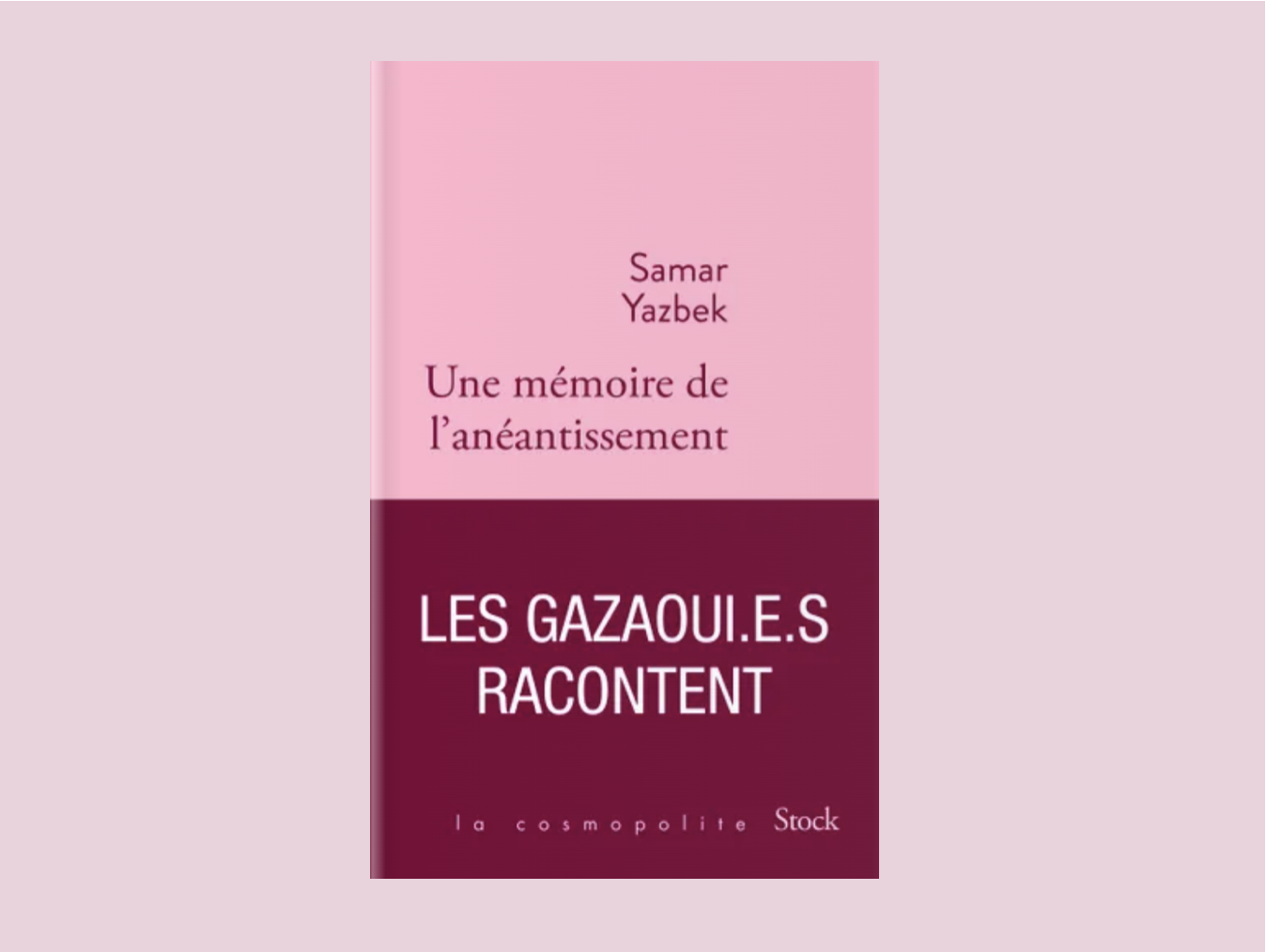
A review by Jean-Pierre Filiu, for Le Monde, November 23, 2025
Samar Yazbek is today one of the most prominent figures in Arabic literature. Her work, which began at the start of this century in Bachar Al-Assad’s Syria, found new life with the popular uprising against that hereditary dictatorship. In In the crossfire (Feux croisés, Buchet-Castel, 2012), Samar Yazbek documents the first months of a Syrian revolution that aimed to be pacifist and inclusive. Her The crossing (Portes du néant, Stock, 2016), however, offers a clear-sighted reflection on the perversion of that revolution, where the escalation by militias benefited both the regime and the jihadists. But Samar Yazbek has not abandoned fiction, publishing two admirable novels, one set in one of the insurgent suburbs of Damascus (Planets of clay (aka The blue pen)/ La Marcheuse, Stock, 2018), the other in the Alawite mountains (Where the wind calls home / La Demeure du vent, Stock, 2023), which are wrongly assumed to be a bastion of the dictatorship.
In Nineteen women, or Dix-Neuf Femmes, les Syriennes racontent (Stock, 2019), Samar Yazbek also paints a poignant fresco of the Syrian tragedy, interweaving the destinies of these women. She follows the same method, combining mastery and humility, in Gaza residents: Your presence is a danger to your life (Mémoire de l’anéantissement, Stock, 2025) to present 25 testimonies of the horror in Gaza. These were collected between March and June 2024 in hospitals in Qatar, where the injured, aged 13 to 65, had been evacuated.
Though all these women and men are civilians, they have endured extreme violence that has traumatized them to the core and sometimes left them permanently mutilated. They were evacuated from the Gaza Strip before the Israeli stranglehold completely tightened during the offensive on Rafah in May 2024, launched despite the “red line” drawn by US President Joe Biden. The humanitarian catastrophe has only worsened since then, with the minimum number of people killed by the Israeli army rising from 30,000 to nearly 70,000 a year and a half later. As for the sick and wounded awaiting medical evacuation, the UN still estimates their number at over ten thousand.
A Plunge into the Horror
(…)
Faced with these human beings who “went to hell and came back,” Samar Yazbek asks: “What is the point of speaking about them using political and ideological slogans and remaining distant from their intimate pain?” She therefore assigns herself the task of recounting “savageries that language itself is powerless to describe.”
The most deeply moving aspect is the echo of comparable suffering from one testimony to another. Though the circumstances and words may differ, the horror is the same, characterizing a true system of annihilation rather than more or less localized “blunders.”
(…)
Samar Yazbek’s choral narrative has, I admit, rekindled the most painful memories of my own stay of just over a month in the Gaza Strip last winter. This work is just one of many already published or in preparation to collect testimonies of the horror inflicted in the Palestinian enclave… Such works will grow in number and scope when, one day, the Palestinian enclave is finally opened to the international press, after more than two years of Israel prohibiting any free and independent access. No, the tragedy of Gaza has not finished haunting us.

