
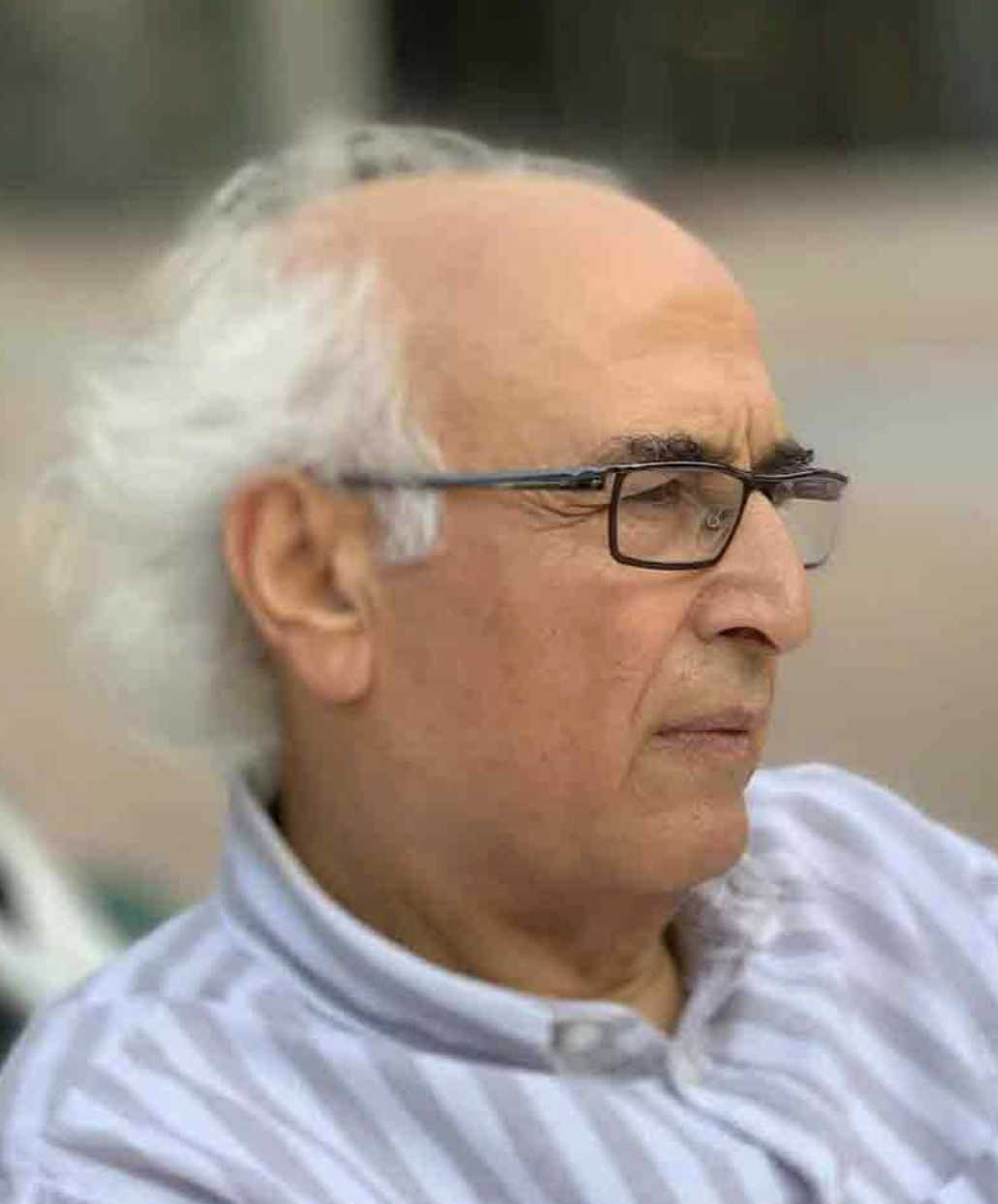
A review for Edebiyathaber.net by Caner Almaz, April 22, 2025
A Sleepless Giraffe in Damascus, penned by Khalil Al Rez, tells the story of a friendship set in a zoo in war-ravaged Damascus. On the surface, the novel appears to depict the bond between a giraffe and a man, but beneath this lies a multilayered narrative exploring themes such as confronting the past and the connections humans form with nature and animals. What begins as a seemingly pastoral tale soon transforms into a metaphor for both individual and collective trauma. In this work, the giraffe stands as a central figure in both character and imagery—more than just an animal, it acts as a mirror reflecting the inner worlds of both the narrator and the reader.
The novel’s protagonist is an unnamed narrator who finds solace only in the giraffe amidst the noise of war and the weight of the past. The story centers on the time the narrator spends with the giraffe at a zoo in the Russian Quarter of Damascus, amidst the chaos of war. Instead of following a linear chronology, the narrative unfolds through memories, emotional impressions, and mental associations. The narrator’s past—his time in Moscow, his relationship with Nonna, and his interactions with characters like Petrovna and Viktor Ivanich—is gradually revealed through this layered structure.
The relationship between the narrator and the giraffe is both physically and emotionally touching. The giraffe becomes a refuge for the narrator’s shattered inner world:
“The giraffe always made me feel that it found in me what it was thinking about, searching for, and listening to.” (p.10)
This silent bond suggests a connection so deep and genuine that it surpasses words. The peace the giraffe finds in the narrator’s presence alleviates his post-war loneliness and trauma.
The giraffe is sleepless, yet it never yawns. This inability to sleep reflects not only a physical condition but also the lingering traces of a fear inherited from the past:
“Nonna noticed that the giraffe never yawned… The giraffe remained in place, neither dozing off nor yawning.” (p.20)
The giraffe’s sleeplessness is tied to a subconscious fear—most likely a residual terror of lions passed down through its ancestors. This metaphor powerfully illustrates how fear and trauma are transmitted across generations. Here, Alrez draws a link between genetic memory and collective trauma.
The zoo serves as an inner sanctuary resisting the trauma of the “outside world.” Throughout the novel, the giraffe’s sleeplessness, fear of lions, longing for acacia trees, and eventual relationship with the television illustrate how inherited memories parallel the unconscious fears carried by humans…
A Sleepless Giraffe in Damascus is not merely a story of friendship that endures destruction; it is also a tale of reckoning with the past, of compassion, and of a search for meaning. Al Rez constructs the zoo as a microcosm where humans, animals, and nature share what remains of civilization’s most precious quality: empathy.
Another significant contribution of the novel is its effort to explore the layers of the human soul through the figure of an animal. Like Nonna, the giraffe symbolizes the pieces of the narrator that he tries to reclaim. In the end, this story—one that even questions blindness and progresses not through facts but through faith and feeling—asks its reader:
“Is it more important to see, or to feel?”

